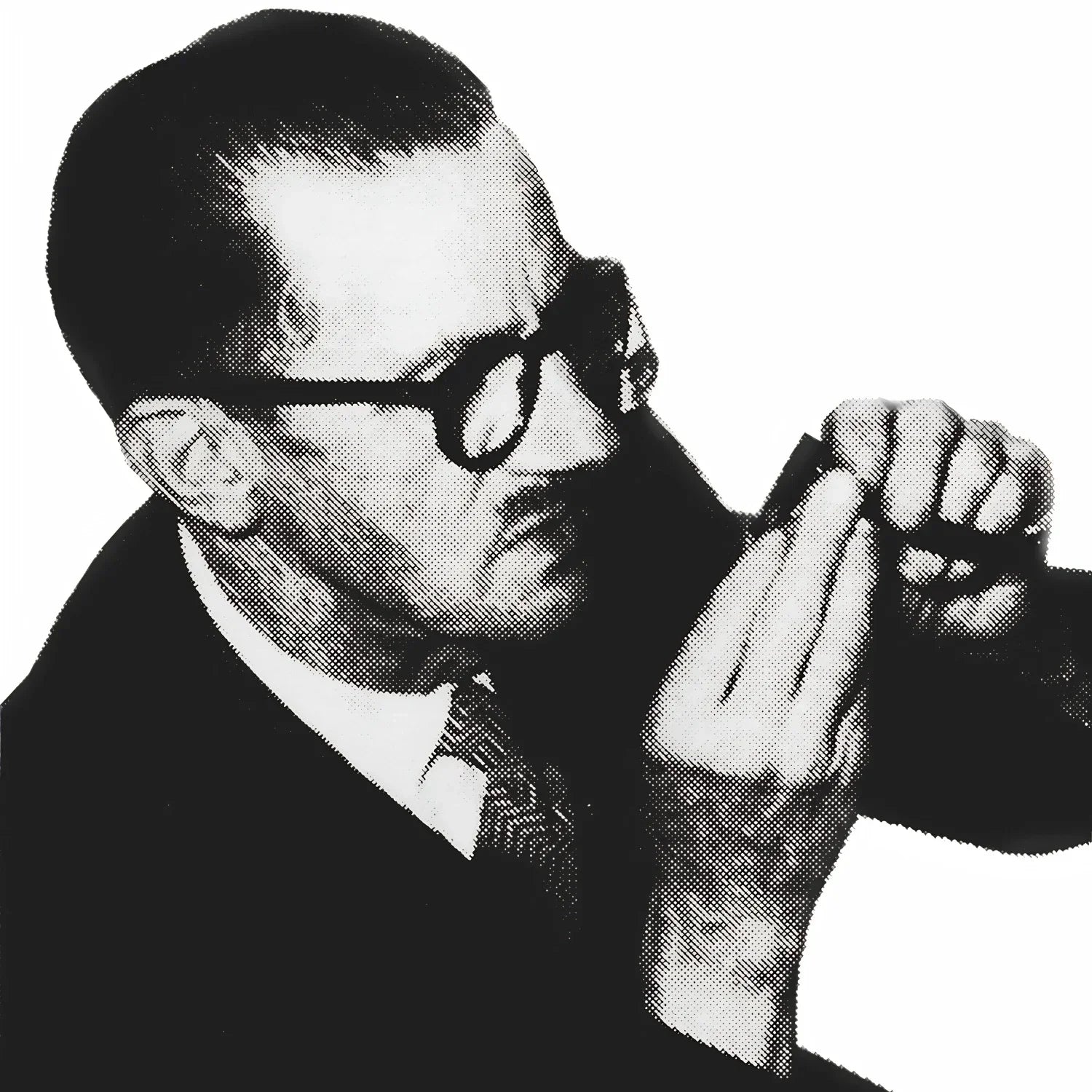
On 13 July 1926, the first Fortis Harwood automatic wristwatches began leaving the manufacture. For the first time, a wristwatch no longer depended on daily manual winding. Energy came from the movement of the wearer. A technical idea became a functioning mechanical watch ready for everyday life.
John Harwood saw a weakness in the wristwatch and refused to accept it. His answer changed mechanical watchmaking.
THE IDEA
n the early 1920s, British watchmaker John Harwood focused on one of the wristwatch’s fundamental weaknesses: Every mechanical watch had to be wound by hand. Every interaction exposed the movement to dust, moisture and wear. Harwood imagined a different solution. A wristwatch that could wind itself through the natural movement of the wearer.

PATENT N°106583
In 1924, John Harwood patented his self-winding wristwatch system in Switzerland. Technically, the mechanism worked through an oscillating weight that moved back and forth within a limited arc inside the movement. As the wrist moved, the weight transferred energy to the mainspring through a bumper-style winding system. Unlike modern full rotors, Harwood’s mechanism operated within controlled travel limits and struck spring buffers at each end of its movement. The principle was revolutionary: the watch generated its own energy while being worn.

A PARTNERSHIP THAT CHANGED WATCHMAKING
Harwood brought the invention. Fortis brought industrial execution. Together, they laid the foundation for the first serially produced automatic wristwatch.

THE MOMENT FORTIS CHANGED WATCHMAKING
Fortis had the capability, the infrastructure and the conviction to take Harwood’s invention beyond the patent stage. The company immediately understood that the real challenge was not the idea itself, but turning it into a reliable wristwatch that could be manufactured at scale. That required far more than assembling a movement. The entire construction had to be rethought for everyday use. The oscillating system had to survive constant motion on the wrist. The calibre had to remain protected despite eliminating the traditional winding process. Reliability had to be engineered into every component. Fortis solved these challenges and transformed Harwood’s invention from a concept into the world’s first serially produced automatic wristwatch.
On 13 July 1926, the first Fortis Harwood automatic wristwatches began leaving the manufacture. From that day on, the automatic wristwatch was no longer a future concept. It was on its way to the wrist.